
ANKO (tsubuan)
Learn how to make authentic Japanese tsubuan (sweet red bean paste) at home with this step-by-step recipe. This method creates a naturally sweet, textured anko perfect for traditional Japanese desserts.
Ingredients
- 250 g Adzuki beans (8.8 oz)
- 230 g sugar (8.1 oz)
- Pinch of salt
Instructions
- Rinse the adzuki beans, then drain them well. If you notice any damaged or floating beans, discard them.
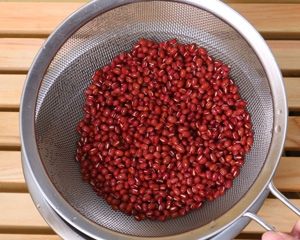
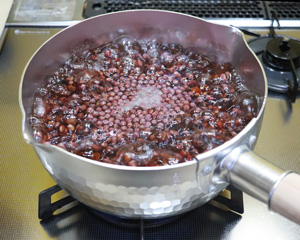
- Place the rinsed adzuki beans in a medium-sized pot and add plenty of water. Bring to a boil over high heat and cook for about 10 minutes. This initial boiling step helps reduce the natural astringency of the beans.After about 10 minutes, the beans will begin to swell to roughly one and a half times their original size. They are not fully cooked yet, so continue to the next step.
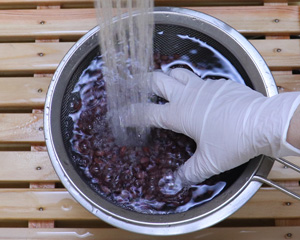
- Drain the beans and rinse them gently under running water to remove any remaining astringency and surface residue.Wash the pot thoroughly before using it again. You will notice a grayish foam and residue clinging to the sides of the pot.
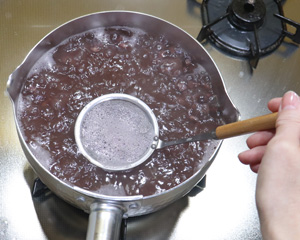
- Return the beans to the clean pot and add about three times as much water as the beans. Bring to a gentle simmer over medium heat and cook for about 30 minutes.As the beans cook, skim off any foam that rises to the surface. If the water level drops and the beans are no longer fully submerged, add more water as needed to keep them covered.
- When the adzuki beans can be easily mashed between your fingers, reduce the heat to medium-low. If the center of the bean still feels firm, continue simmering until tender.
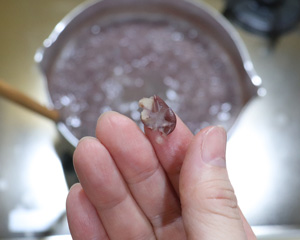
- Add half of the sugar and stir gently to combine. Simmer over low heat for about 25–30 minutes, stirring occasionally. Sugar is added in two additions to allow the beans to absorb it gradually and maintain their shape.
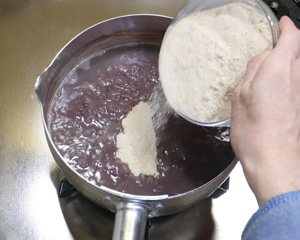
- After about 10–15 minutes, add the remaining sugar and stir gently to dissolve. Continue simmering, skimming off any foam that rises to the surface.
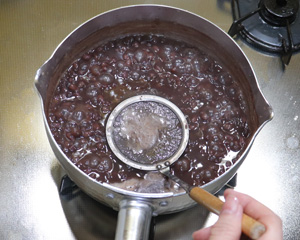
- Stir gently from the bottom of the pot from time to time to prevent scorching. Be careful not to over-stir, as this can cause the beans to break down and become mushy.
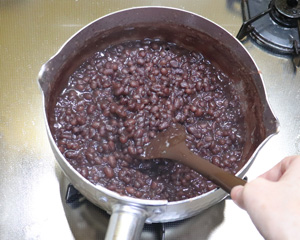
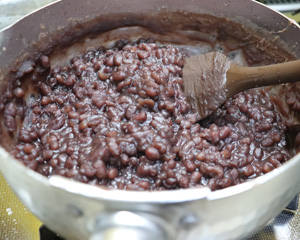
- When the beans have thickened to this consistency, turn off the heat. Add a pinch of salt and stir gently to combine. The salt enhances the sweetness and balances the flavor.
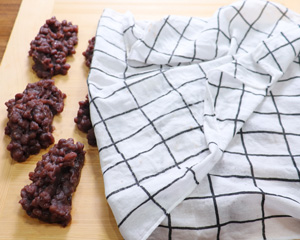
- To cool the anko more quickly, spread it in small portions on a flat tray or baking sheet. Anko tends to dry out on the surface as it cools, so covering it with a damp kitchen towel or plastic wrap to prevent it from drying out.
Notes
- Simmering time is only a guide. Check the beans, not the clock.
- Anko thickens as it cools, so stop cooking slightly softer.
- Use a silicone spatula for gentle stirring.