Authentic Tsubuan Recipe (Sweet Red Bean Paste)
Have you ever tried anko, the sweet bean paste used in many traditional Japanese sweets? It is made by cooking beans with sugar, and different types of beans can be used to create different varieties.
The most common type is made from adzuki beans, also known as small red beans.

There are two main styles of anko made from adzuki beans:
tsubuan (粒あん) and koshian (こしあん).
Tsubuan (粒あん)
The word tsubu means “grain” or “chunk.” In Japanese, “an” generally refers to a thick paste or filling. In the context of sweets, it usually means sweet bean paste.
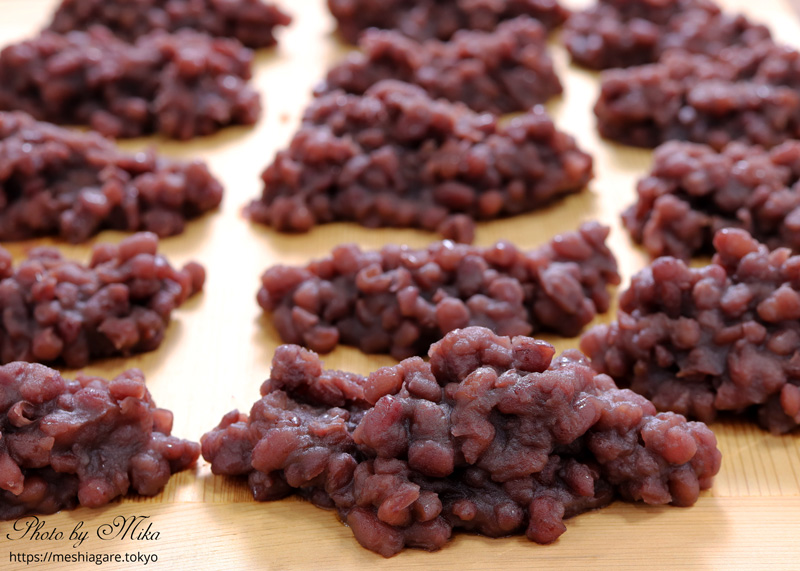
Tsubu-an contains whole or partially mashed adzuki beans, so you can enjoy the natural texture of the beans, including their thin skins.
Compared to koshian, tsubuan feels more rustic and casual. Traditionally, many homemade versions of anko are tsubuan, although making anko at home is less common nowadays.
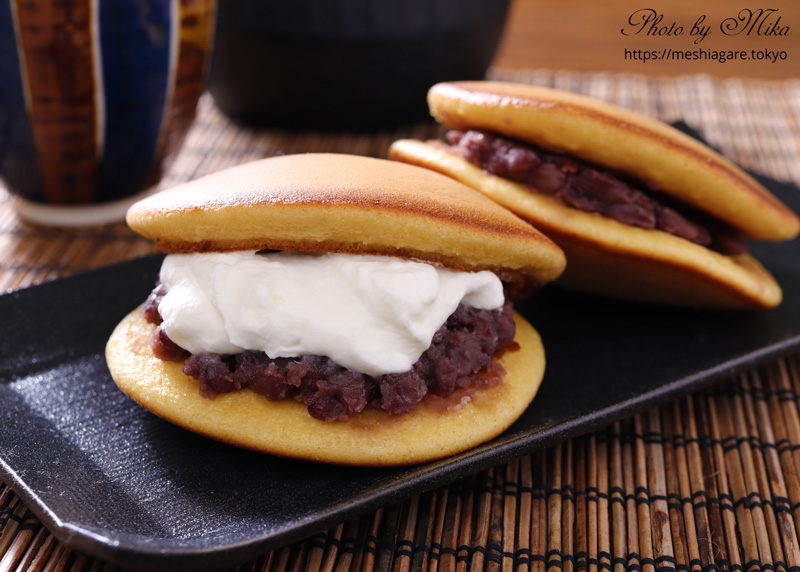
Tsubuan is used in both traditional Japanese sweets and modern Western-inspired desserts. It pairs beautifully with cream, such as whipped cream or ice cream.
For many Japanese people, tsubuan evokes a nostalgic, homemade feeling.
Koshian (こしあん)
The word koshi means “strained.”
To make koshian, boiled adzuki beans are pressed through a fine mesh strainer to remove the skins completely. The paste is then cooked and stirred in a pan until it becomes smooth and silky.
Koshian is often considered more refined and elegant than tsubuan. When made by skilled Japanese confectionery chefs, its texture is incredibly smooth and delicate—almost as if it melts in your mouth.
Tsubuan vs Koshian
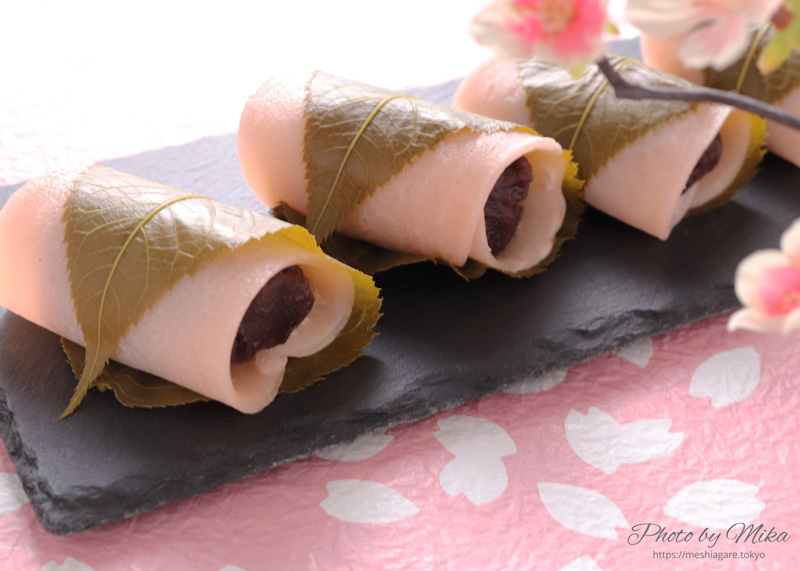
Traditionally, certain Japanese sweets are associated with a specific type of anko. However, in many cases, either tsubuan or koshian can be used depending on personal preference.
In some regions of Japan, one type may be more common or easier to find than the other. When you buy sweets filled with anko, the type is usually clearly stated on the label.
Japanese people sometimes playfully ask each other, “Are you a tsubuan person or a koshian person?” You can even find lighthearted debates about this topic online. For many Japanese people, this small preference can feel surprisingly important.
Choosing the right sugar for anko
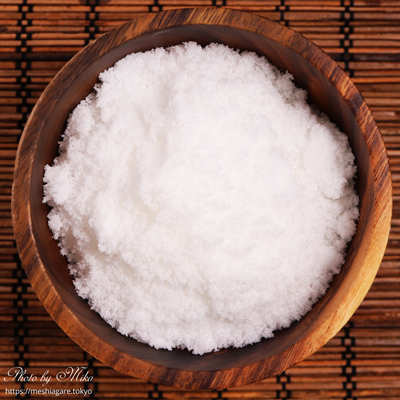
In Japan, anko is most commonly made with johakuto (上白糖). However, any mild sugar without a strong flavor, such as granulated sugar, can be used as a substitute.
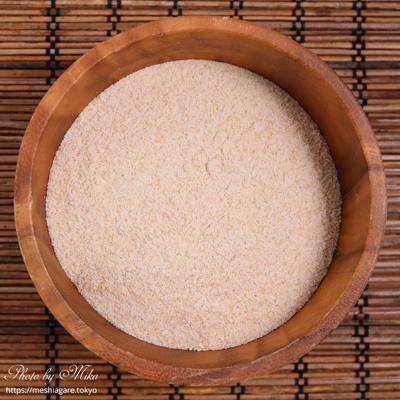
In this recipe, I used kibizato (きび砂糖), which has become popular in recent years for home cooking in Japan.
As a general rule of thumb, the amount of sugar used is roughly equal to the weight of the adzuki beans. However, the sweetness can always be adjusted to suit your personal preference.
How to preserve anko
If you are planning to make Japanese sweets with anko, you will probably prepare it in advance. You may also have some leftovers.
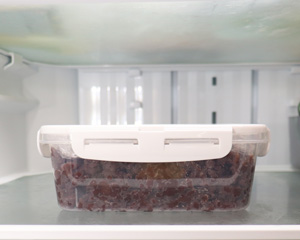
In that case, store the anko in an airtight container in the refrigerator. It will keep for about 3 to 4 days.
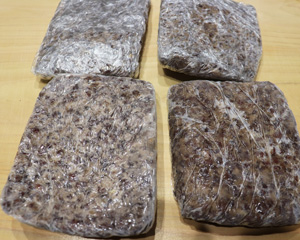
For longer storage, divide the anko into small portions and wrap each portion tightly in plastic wrap before freezing. Frozen anko can be kept for about one month. Thaw it naturally in the refrigerator before using.
Today’s recipe
Today, I’m going to share my tsubuan recipe with you, as it is much easier to make at home than koshian.
Not only is it simpler, but I personally prefer tsubuan. For me, tsubuan feels more comforting and homemade.
ANKO (tsubuan)
Ingredients
- 250 g Adzuki beans (8.8 oz)
- 230 g sugar (8.1 oz)
- Pinch of salt
Instructions
- Rinse the adzuki beans, then drain them well. If you notice any damaged or floating beans, discard them.
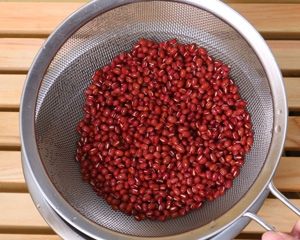
- Place the rinsed adzuki beans in a medium-sized pot and add plenty of water. Bring to a boil over high heat and cook for about 10 minutes. This initial boiling step helps reduce the natural astringency of the beans.After about 10 minutes, the beans will begin to swell to roughly one and a half times their original size. They are not fully cooked yet, so continue to the next step.
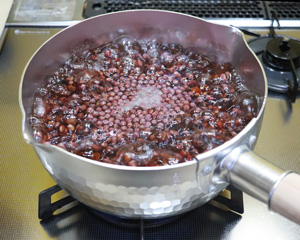
- Drain the beans and rinse them gently under running water to remove any remaining astringency and surface residue.Wash the pot thoroughly before using it again. You will notice a grayish foam and residue clinging to the sides of the pot.

- Return the beans to the clean pot and add about three times as much water as the beans. Bring to a gentle simmer over medium heat and cook for about 30 minutes.As the beans cook, skim off any foam that rises to the surface. If the water level drops and the beans are no longer fully submerged, add more water as needed to keep them covered.
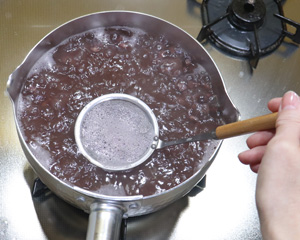
- When the adzuki beans can be easily mashed between your fingers, reduce the heat to medium-low. If the center of the bean still feels firm, continue simmering until tender.
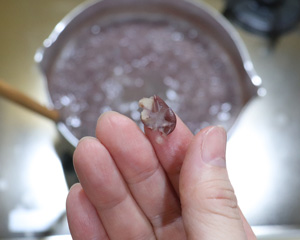
- Add half of the sugar and stir gently to combine. Simmer over low heat for about 25–30 minutes, stirring occasionally. Sugar is added in two additions to allow the beans to absorb it gradually and maintain their shape.
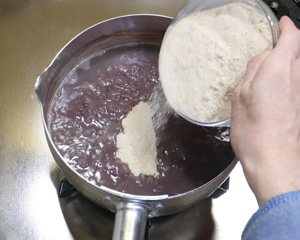
- After about 10–15 minutes, add the remaining sugar and stir gently to dissolve. Continue simmering, skimming off any foam that rises to the surface.
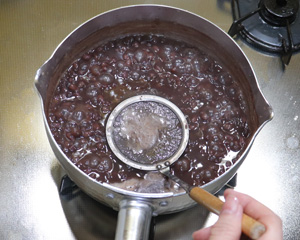
- Stir gently from the bottom of the pot from time to time to prevent scorching. Be careful not to over-stir, as this can cause the beans to break down and become mushy.
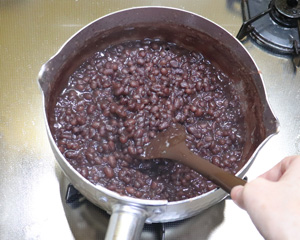
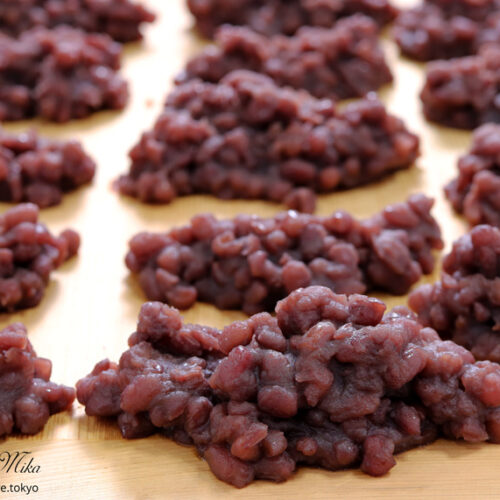
- When the beans have thickened to this consistency, turn off the heat. Add a pinch of salt and stir gently to combine. The salt enhances the sweetness and balances the flavor.
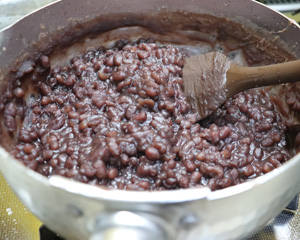
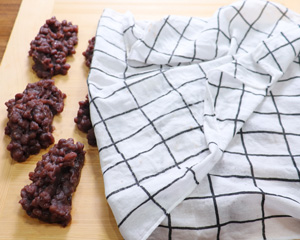
- To cool the anko more quickly, spread it in small portions on a flat tray or baking sheet. Anko tends to dry out on the surface as it cools, so covering it with a damp kitchen towel or plastic wrap to prevent it from drying out.
Notes
- Simmering time is only a guide. Check the beans, not the clock.
- Anko thickens as it cools, so stop cooking slightly softer.
- Use a silicone spatula for gentle stirring.
Common Questions About Anko
What can I use anko for?
Anko is used in many Japanese sweets such as mochi, dorayaki, and buns, and it can also be used as a topping for toast or pancakes.
How long does homemade anko last?
It keeps about 3–4 days in the refrigerator and about one month in the freezer.
Can I reduce the sugar in anko?
Yes, but sugar is not only for sweetness. It also affects texture and preservation, so reducing too much may change the result.
I hope you enjoy making your own tsubuan at home.